WHAT KANSAS WINTERS DO TO YOUR CONCRETE
Kansas winters put concrete through a cycle that most homeowners do not think about until the damage is visible. Water seeps into the soil beneath slabs, freezes, expands, and pushes the concrete upward. When it thaws, the soil compresses and the slab settles lower than where it started. This freeze-thaw cycle repeats dozens of times between November and March in the Wichita area, and each round compounds the shifting underneath your driveway, sidewalk, patio, or garage floor.
By spring, the evidence shows up clearly. A driveway section sits half an inch lower than the one next to it. A sidewalk panel has tilted enough to catch a shoe. A patio slopes toward the house instead of away from it. These shifts happen gradually over winter, but once the snow melts and the ground firms up, the results are hard to miss. The concrete did not crack on its own. The ground beneath it moved, and the slab followed.
WHY SPRING IS THE RIGHT WINDOW FOR MUDJACKING
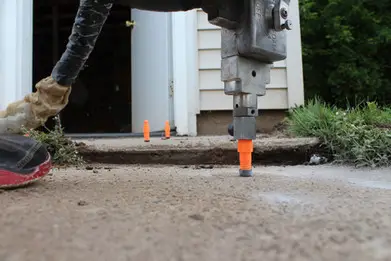
Mudjacking works by pumping a dense mixture of sand, soil, and cement beneath the settled slab to lift it back into position. The process depends on stable ground conditions, which is why spring in Kansas hits the sweet spot. The soil is no longer frozen, the heavy spring rains have not yet saturated the ground, and temperatures are consistent enough for the fill material to cure properly. Waiting until summer means working around saturated soil from late-spring storms and harder scheduling during peak season.
For Wichita homeowners, the practical benefit of acting in spring is straightforward. Mudjacking takes a few hours per project, and the concrete is usable again the same day. A driveway that settled over winter can be level again before your first weekend cookout. A sidewalk that became a tripping hazard in February is fixed before the kids are playing outside every afternoon. The timeline from phone call to finished work is measured in days, not weeks.
MUDJACKING VS. FULL REPLACEMENT
The first instinct most homeowners have when they see settled concrete is to assume the whole slab needs to come out. That assumption usually costs thousands of dollars more than necessary. Full concrete replacement on a standard Wichita driveway runs anywhere from $3,000 to $8,000 depending on size and access. Mudjacking the same driveway typically costs 50 to 70 percent less, and the repair lasts for years.
Replacement also means days of work, heavy equipment on your property, and a curing period where you cannot use the surface. Mudjacking involves small holes drilled through the slab, the fill material pumped underneath, and the holes patched when the slab is level. LevelUp Concrete Leveling handles the entire process with minimal disruption. There is no demolition, no hauling away old concrete, and no waiting for new concrete to set. The slab you already have is the slab you keep.
THE SAFETY ISSUE HOMEOWNERS UNDERESTIMATE
A quarter-inch lip between two concrete panels does not sound like much until someone catches a toe on it. Settled concrete around Wichita homes creates tripping hazards on driveways, front walks, and backyard patios that get worse over time, not better. The settlement that started at a quarter inch in January may be closer to an inch by April after another round of freeze-thaw movement.
Beyond the tripping risk, settled concrete changes how water drains around your property. When a slab slopes toward your foundation instead of away from it, rainwater follows the path of least resistance. Over a full Kansas storm season, that redirected water can cause basement moisture, foundation erosion, and soil washout that creates even more settlement. Fixing the concrete now prevents the kind of cascading damage that turns a $500 mudjacking job into a $5,000 foundation repair.
WHAT LEVELUP CONCRETE LEVELING LOOKS AT DURING AN ASSESSMENT
Not every settled slab needs the same approach. LevelUp Concrete Leveling evaluates the extent of the settlement, the condition of the slab itself, and the soil conditions underneath before recommending mudjacking. A slab with minor hairline cracks and half an inch of settlement is a straightforward lift. A slab that has broken into multiple pieces or settled more than four inches may need a different conversation.
The assessment also considers the surrounding area. If one driveway section settled, the sections next to it may be starting the same process. Catching adjacent panels before they drop further saves a second service call and keeps the entire surface level. LevelUp serves Wichita and surrounding Sedgwick County communities, and the assessment is the first step in determining exactly what your concrete needs.
GET YOUR WICHITA CONCRETE LEVEL BEFORE SUMMER
Call LevelUp Concrete Leveling at 316-554-6777 to schedule a concrete assessment. Mudjacking is the fastest, most affordable way to fix settled driveways, sidewalks, patios, and garage floors across Wichita and surrounding Kansas communities. Visit levelupconcreteict.com to learn more about how mudjacking works.